Ceiling stain forming on the floor below yours
A ceiling stain with no matching roof leak or upstairs plumbing problem points to a riser running through the wall behind it. Report it to the association fast; the source may be floors above.
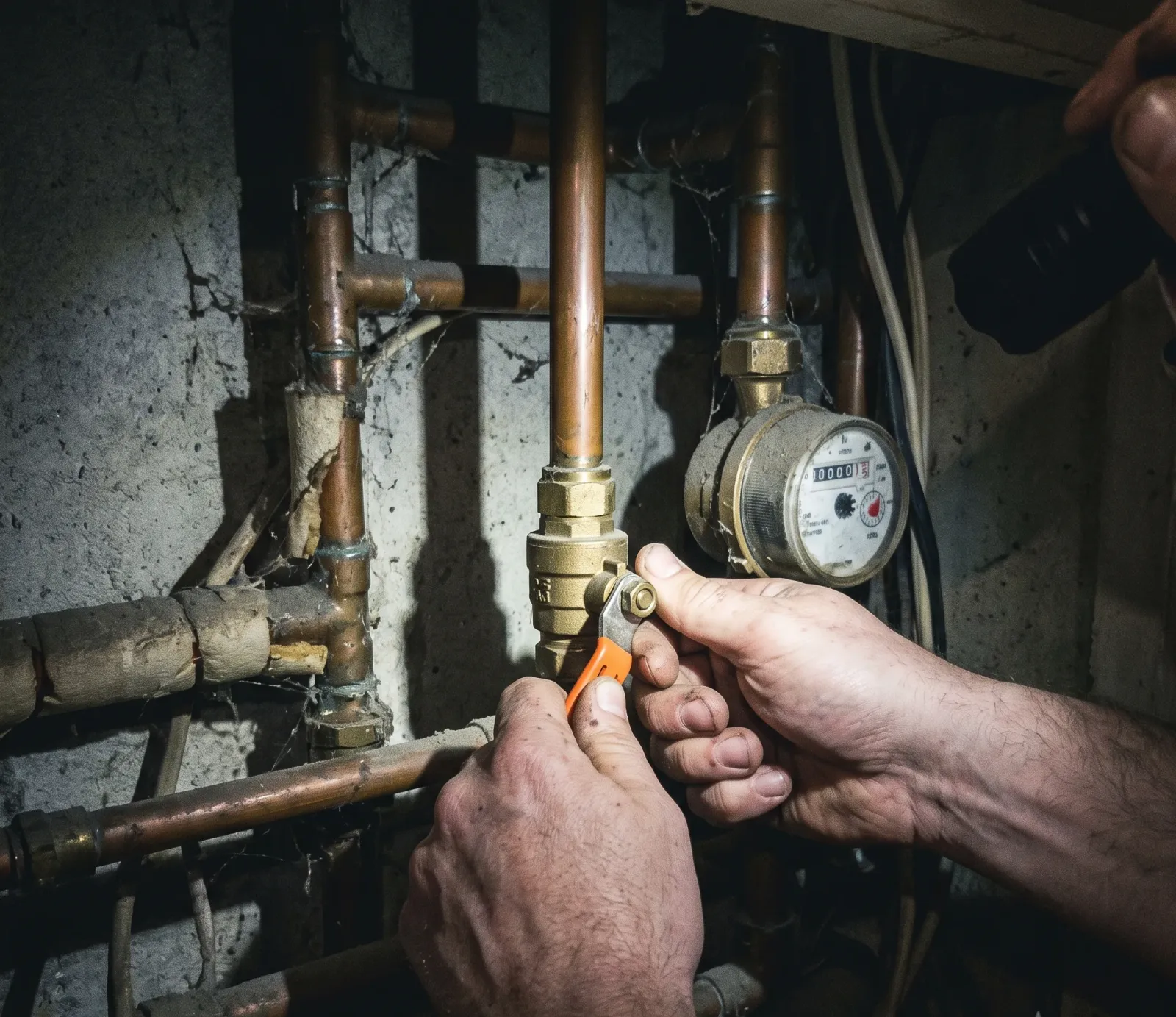
Riser and stack failures relate to pipe age, not weather, so they occur year-round rather than clustering in hurricane season the way storm surge or flat-roof leaks do.
A high-rise riser or stack leak is a failure in the vertical supply or waste pipe running through a condo tower's walls, often cast iron. It shows as ceiling stains on lower floors, far from the actual break. It escalates fast, often needs association access, and coverage depends on whether the policy or the condo master policy applies.
Named storms push water toward Las Olas Isles and Seven Isles from June through November, and a king tide can shove canal water into a Sailboat Bend yard on a clear afternoon with no rain at all.
A ceiling stain with no matching roof leak or upstairs plumbing problem points to a riser running through the wall behind it. Report it to the association fast; the source may be floors above.
A damp or warm patch on a shared wall, away from any bathroom, suggests a supply riser leaking inside the wall cavity. Do not cut into it yourself; this is usually a common-element pipe.
A sewage smell without an overflowing toilet or visible backup suggests a waste stack crack rather than a fixture problem. This needs prompt attention since waste water carries contamination risk.
Stains appearing on several stacked floors in roughly the same spot confirm a vertical riser, not a roof or unit-specific leak. This pattern is the clearest sign versus a single-unit plumbing issue.
A sudden pressure drop or discolored water building-wide can mean a stack has failed enough to affect shared supply. Report it immediately since this often means active flooding somewhere in the line.
Fort Lauderdale's older condo towers near Galt Ocean Mile and the Intracoastal often still run original cast iron stacks, decades into a service life where internal pipe corrosion becomes a real failure risk.
Because these buildings stack many units on shared vertical lines, a single riser failure in a downtown Fort Lauderdale high-rise can affect several floors of unrelated owners at once, unlike a single-family slab leak.
A tropical downpour that floods a street in Rio Vista or Harbor Beach can push water into a garage or ground floor within an hour. The licensed pros we connect you with respond across Fort Lauderdale with extraction equipment sized for slab-level flooding, not basement pumps this city never needed.
Riser and stack leaks are frequently confused with roof leaks in upper-floor condo units, since both produce ceiling staining without an obvious cause visible from inside the unit. A riser leak is mistaken for a roof leak because both stain ceilings in upper units. The difference: roof leaks worsen after rain and flat-roof storms, while riser stains appear regardless of weather and often first show on a lower floor, not the top one, since the pipe runs straight down through the building.
The licensed pros we connect you with confirm which floor and which riser line is actually leaking before any wall or ceiling is opened, since staining often appears well below the real break in a high-rise stack.
They isolate and dry the affected unit and any unit below it, checking behind baseboards and under shared-wall drywall where riser water tracks silently between floors for days before surfacing.
Flooring near the New River and inland canals soaks up water fast because the ground underneath sits so close to the water table. Homes across Fort Lauderdale rest on a poured foundation with no basement to catch runoff, so a soaked floor means drywall and cabinets are next unless drying starts within hours.
| Who Handles It | What's Covered |
|---|---|
| Water moving through a Rio Vista or Harbor Beach home does not wait for anyone to feel ready. Floors near the New River and the Intracoastal take on water fast during a tropical downpour, and the clock for drying starts the moment it does. The licensed pros we connect you with answer that call. | Every Fort Lauderdale home sits on a concrete slab, so damage starts at the floor and climbs, not from a basement below. Near the New River or the Intracoastal, ground moisture keeps feeding the slab from underneath even after the visible water is gone, which is why drying takes longer than owners expect. |
| Storm season stretches long here, and Broadview Park to Harbor Beach all wait on the same radar. A named storm rarely finishes the job alone; the days after, with wet slabs and closed-up rooms, do real damage too. The licensed pros we connect you with plan around both halves of that timeline, not just the first one. | Water at floor level near Rio Vista or the Las Olas Isles moves fast, because every home here sits on a concrete slab, not a basement. There is no lower level to catch it first. Once it soaks flooring and drywall, drying it out is a race against a shallow water table that keeps pushing moisture back up. The licensed pros we connect you with know slab drying, not basement pumping. |
| Water moving across a slab floor in Coral Ridge or near the New River does not wait for business hours. Crews on call now handle the extraction, drying and mold checks that follow king tides, tropical downpours or a flat roof leak, and get someone out fast whether you are in Victoria Park or closer to Sunrise. | Storm surge near Harbor Beach and canal overflow along the New River do not wait for permission. Once water sits on a slab foundation, moisture climbs into flooring and cabinetry faster than most homeowners expect. Reaching out early matters more than reaching out to the right company first. The licensed pros we connect you with can be on the phone within minutes, day or night. |
Do not open walls or ceilings chasing the leak. Shut off the unit's own water where possible, place buckets or towels under active drips, and photograph every stain before it dries or is painted over. Call the condo association immediately, since risers are usually a common element, not something an individual owner can access or repair alone.
A riser or stack leak shows up inside a high-rise wall or ceiling, not under a fixture. Water stains spread across a condo ceiling below the leak, often several floors down from the actual break in the cast iron pipe. Fort Lauderdale towers along the Intracoastal and Galt Ocean Mile carry these vertical supply and waste stacks through every floor, so one failure point can mark units well away from the source, which is why locating the real floor takes more than looking at the wet ceiling.
Standing water near Las Olas or the Intracoastal will not wait for morning. Contact us so a licensed pro can look tonight.A slab leak near Sistrunk or Melrose Park runs less than a canal-front condo flood off the Intracoastal, because water spreads across less flooring and touches fewer walls. The licensed pros we connect you with price by square footage soaked and how long moisture sat, not a flat number. pricing guide, and the service that handles this is Emergency Water Extraction.
Roof Leak Response. A roof leak in Fort Lauderdale usually appears as a spreading ceiling ring, a damp patch near a skylight or vent, or water dripping after a tropical downpour.
Water Damage Restoration, Fort Lauderdale. A dishwasher leak is water escaping from the appliance itself, its supply line, or its drain hose rather than a plumbing or roof source.
Water Damage Restoration in Fort Lauderdale. An AC condensate line clog means the tube draining moisture off the indoor coil has backed up, so the overflow pan fills and spills onto the closet or attic floor below.
It can be either, depending on the condo documents and Florida condo law. Risers inside walls are usually a common element the association insures, but damage to your unit's finishes may fall to your own HO-6 policy. Check your declaration page before assuming.
Report it to the building manager or association immediately, since the shutoff valve for a shared riser is often outside your unit. Delaying lets water keep tracking down through Fort Lauderdale high-rise units below yours, floor after floor.
Yes, in older towers along Galt Ocean Mile or the Intracoastal built with cast iron stacks, decades of pipe corrosion from the inside out is common. The pipe can look solid from outside while thinning enough internally to fail without warning.
Sometimes days, sometimes months. A slow seep behind drywall can go unnoticed until a stain appears, while a full stack failure floods multiple units within an hour. Age and pipe material of the specific riser affect the pace.
Water sitting on a slab foundation in Fort Lauderdale does not stay put. It travels under baseboards, into drywall, and toward canal-front lots and low streets near the New River just as fast. The licensed pros we connect you with track how far it spread before drying starts, because guessing at that shortens nothing and costs more later.
Call (954) 910-2507