Understanding Fort Lauderdale's High Water Table and Home Drainage
Why a shallow water table shapes drainage, slab moisture, and flooding risk across Fort Lauderdale.
A high water table means groundwater sits only a few feet under Fort Lauderdale yards, not far below the surface. During heavy rain or a king tide, that groundwater rises and adds hydrostatic pressure against slab foundations. Even after rain stops, moisture keeps moving upward through the concrete by capillary rise, so slabs can stay damp well after the rain has cleared.
Why the Water Table Sits So Close to the Surface
Fort Lauderdale sits low. The city says most homes stand less than five feet above sea level, on the flat Atlantic Coastal Ridge above a water table that is shallow almost everywhere. That closeness between ground surface and groundwater changes how a slab foundation behaves. It is not a defect in one house near the New River. It is the baseline condition under nearly every property in the city, from Rio Vista to Lauderdale Manors.
A high water table means the ground under a Fort Lauderdale slab is often already close to saturated before a storm ever arrives. Soil saturation reduces how much a lot can absorb during a tropical downpour, so water that would soak into drier ground elsewhere instead sits on the surface or pushes against the slab edge. Add a king tide pushing water up through canals and storm drains, and a property can face moisture pressure from above and below at once.
This guide explains how the water table under Fort Lauderdale affects drainage, slab moisture, and the risk of groundwater working its way into a home, and what that means for owners in canal-front and inland neighborhoods alike. It does not cover a leaking supply line or a failed fitting under a slab; that is plumbing, not groundwater, and it is handled separately. What follows is about water already in the ground finding its way up.
How a Shallow Water Table Changes Slab Moisture
Hydrostatic pressure is the force groundwater exerts against anything standing between it and lower ground, including a concrete slab. When the water table rises after heavy rain or a king tide, that pressure rises with it. Water always moves toward lower pressure, so if the soil beneath a slab is more saturated than the air inside the house, moisture is pushed upward through the concrete rather than pulled by gravity, even with no standing water visible on the surface.
Grading matters as much as rainfall totals in Fort Lauderdale. Yards that slope toward a slab instead of away from it push runoff straight at the foundation, and a swale that has silted in stops carrying water to the street. Add a shallow water table underneath, and there is nowhere left for that runoff to go but sideways into the soil next to the house, then up through the slab.
- The Atlantic Coastal Ridge keeps Fort Lauderdale flat and low, so rain and tidal water have little natural downhill path and depend on canals and pump stations instead.
- A shallow water table means soil stays saturated for long stretches, leaving less room to absorb a sudden downpour before it reaches lawns, driveways, and slab edges.
- Hydrostatic pressure builds under a slab when surrounding soil is saturated, pushing moisture upward through the concrete rather than waiting for a crack or gap.
- Sea-level rise is slowly raising the baseline water table itself, which is part of why king tide flooding on low-lying streets has become a repeated, documented event.
- Canals threaded through neighborhoods like Rio Vista and the Lauderdale Isles double as the drainage system's outlet, so a high canal level limits how fast a yard can drain.
- Grading that once shed water toward the street can settle out of level over decades, quietly turning a yard into a shallow basin that holds water against the house.
Grading, Swales, and Where Stormwater Actually Goes
A vapor barrier, a sheet of plastic placed under a slab before it is poured, is meant to block this upward moisture path. Older homes built before this became standard practice, common in many of Fort Lauderdale's established neighborhoods, may have a thin barrier, a damaged one, or none at all. Where that barrier is missing or compromised, moisture from a shallow water table has a more direct route into flooring, baseboards, and slab-set cabinetry.
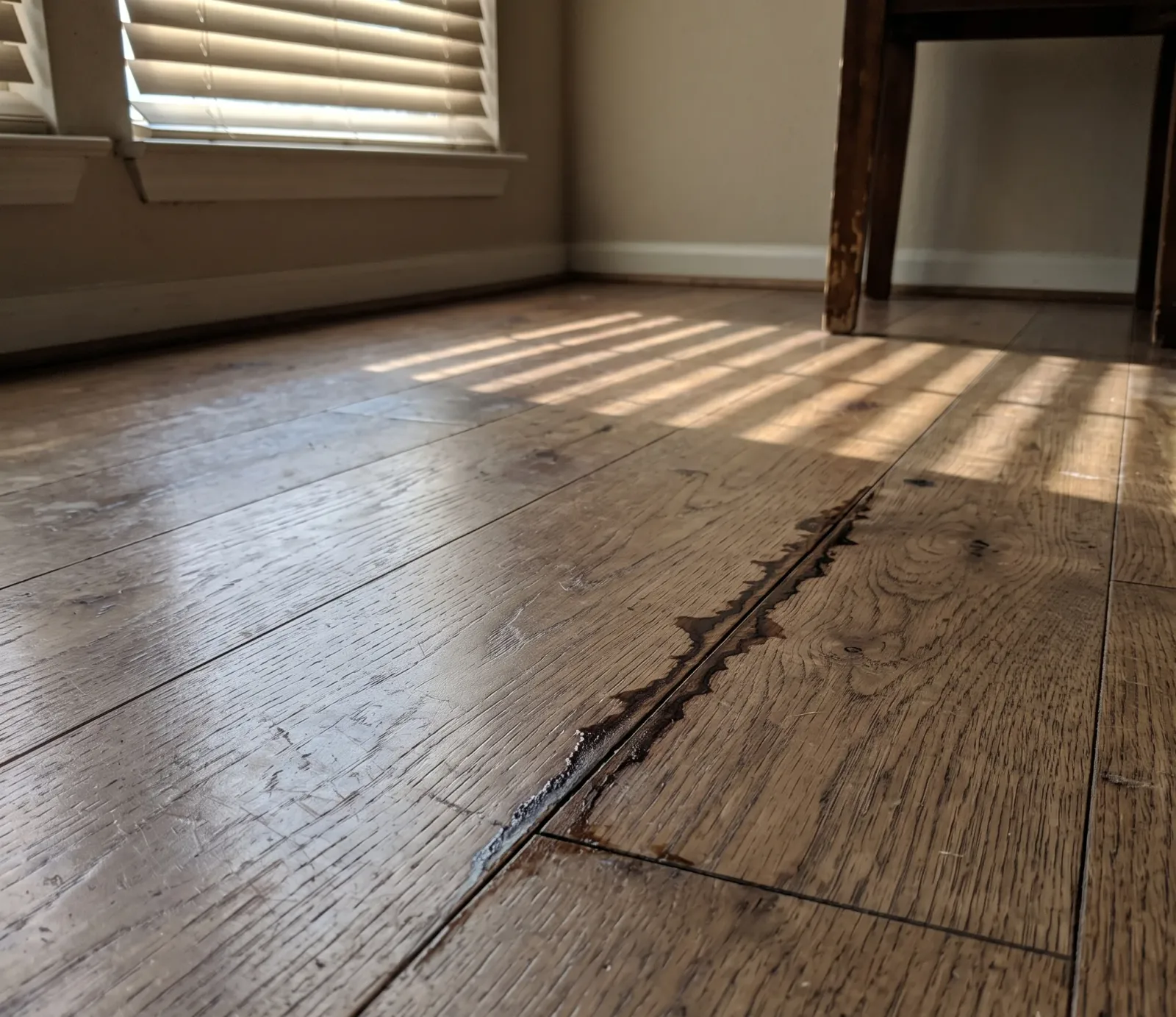
This matters for buying decisions and for diagnosing a musty smell with no visible leak. A homeowner in Coral Ridge or Melrose Park who notices lifting vinyl flooring or a persistent damp smell along an exterior wall may be looking at slab moisture from below, not a roof or plumbing problem. Because the water table is a citywide condition rather than a single address's bad luck, this kind of slow intrusion is worth ruling out before assuming the cause is something else.
- Capillary rise draws moisture through concrete pores the way a paper towel pulls up a spill, working against gravity whenever the soil underneath stays wet.
- A vapor barrier placed under the slab before it was poured blocks some of that upward moisture, but older homes may have a thin one or none at all.
- Flooring glued directly to a moist slab can trap water underneath, so tile, laminate, or vinyl can look fine while the concrete beneath stays damp for weeks.
- Slab-set cabinetry and baseboards sit closest to the floor, which is why they often show swelling or staining before a homeowner notices any smell.
Groundwater Risk by Fort Lauderdale Area
Grading, the slope of the ground around a foundation, is supposed to carry rainwater away from a house rather than toward it. On flat land like Fort Lauderdale's, there is little natural slope to work with, so grading has to be built in deliberately, often paired with a swale, a shallow ditch designed to hold and slowly drain stormwater along a property line or street edge. Where grading has settled flat or reversed over the years, water pools against the foundation instead of moving off it.
A perimeter drain, a pipe or trench built around a foundation to intercept water before it reaches the slab edge, is one of the few tools that works with a high water table rather than against it. Because the ground here rarely drains by gravity alone, engineered systems like swales and perimeter drains carry more of the load than they would in a hillier city. When these systems are undersized, clogged, or simply absent, the slab becomes the last line of defense against the surrounding groundwater.
| Area | Elevation Concern | Common Moisture Path |
|---|---|---|
| Rio Vista | Canal-front, low grade | Groundwater push at slab edge |
| Harbor Beach | Near Intracoastal, low grade | Capillary rise through slab |
| Sailboat Bend | New River adjacent | Saturated soil after rain |
| Melrose Park | Inland, flat grading | Standing water, slow drainage |
| Coral Ridge Isles | Waterway-lined lots | Perimeter drain overload |
What Homeowners Can Do Between Storms
Stormwater in Fort Lauderdale relies heavily on canals and pump or gravity outfalls rather than natural downhill runoff, because the land itself is too flat to move water on its own. The city's Public Works Department runs stormwater operations and takes flooding reports through a customer call center, and city records show ongoing work on canal outfalls, including projects tied to the New River C-12 Canal. This engineered system is doing work that terrain would otherwise do in a less flat city.
Sea-level rise adds pressure to a system that already has little room to spare. As sea level climbs, the water table it sits above tends to rise too, which the city has described as an ongoing and worsening driver of king tide flooding in low-lying streets and yards. For a canal-front property near the Intracoastal or along a waterway feeding into it, this means the baseline groundwater level a home has to contend with is not fixed. It is drifting upward over time.
When Rising Moisture Needs a Licensed Pro
The April 2023 storm showed what happens when a saturated water table meets extreme rainfall at once. The National Weather Service's preliminary figure for that event was near 25.9 inches in about 24 hours, described as a 1-in-1,000-year rainfall, and it shut down Fort Lauderdale-Hollywood International Airport. Broward County's own climate review confirmed 2023 was the wettest year on record for the area. Ground already close to saturated could not absorb rain arriving that fast, so it stood on lawns and streets far longer than the rain itself lasted.
December 2019 showed a smaller version of the same pattern, with the National Weather Service documenting significant flooding across Fort Lauderdale and nearby Hollywood, Hallandale Beach, and Dania Beach, and over 4 inches falling in a single hour on December 23. After either kind of event, surface water recedes first, but ground moisture can keep migrating upward into a slab for longer, because the water table itself takes time to drop back down. That lag is why a slab can still test wet well after the street looks dry.
Ground Facts Worth Knowing
- Most Fort Lauderdale homes sit less than five feet above sea level on slab foundations, with a water table close enough to the surface that groundwater can push moisture upward through concrete long after standing water is gone.
- Broward County recorded 2023 as its wettest year on record, at 114.5 inches of rain for the Fort Lauderdale area.
- An April 2023 storm dropped roughly 25.9 inches of rain in about 24 hours, a rainfall the National Weather Service called a 1-in-1,000-year event.
- December 2019 brought 4.45 inches of rain in a single hour, briefly closing Fort Lauderdale-Hollywood International Airport.
- Stormwater here relies on engineered canals and pump or gravity outfalls, since the flat, low terrain gives it almost no natural downhill runoff.
- The City's Public Works Stormwater Operations division runs a 24-hour line for reporting flooding or clogged storm drains.
Frequently Asked Questions
Why does my yard stay wet for days after rain?
Yes. Because most of Fort Lauderdale sits less than five feet above sea level with a shallow water table underneath, groundwater can migrate up through a slab through capillary rise even when no rain has fallen recently. This shows up as musty smells, damp flooring, or peeling baseboards with no obvious leak, and it is common in older homes with a thin or missing vapor barrier under the slab.
Is a high water table really a problem in Fort Lauderdale?
Yes. City climate pages note most Fort Lauderdale properties sit less than five feet above sea level, and the water table stays shallow year-round, so slabs near the New River or a canal see moisture pressure even on dry days.
Will a vapor barrier stop my slab from staying damp?
Not on its own. A vapor barrier under the slab blocks some capillary rise, but it does nothing for water that arrives from above during a tropical downpour or pushes up through yard soil during a king tide near the Intracoastal.
How is groundwater intrusion different from a pipe leak?
Groundwater pressure pushes moisture upward into the slab from below, while a leaking pipe soaks one localized area from a fixed point. Fort Lauderdale's shallow water table makes the first kind harder to stop with patching alone.
What drainage fixes actually help around my foundation?
Regrading a yard so it slopes away from the foundation, adding a swale to carry water toward the street, and clearing gutters and downspouts all reduce standing water against a Fort Lauderdale home's slab edge.
Is your slab holding moisture it shouldn't?
If a Fort Lauderdale slab keeps staying damp after storms clear, call the licensed pros we connect you with for moisture testing and a drying plan built for a high water table.
Call (954) 910-2507