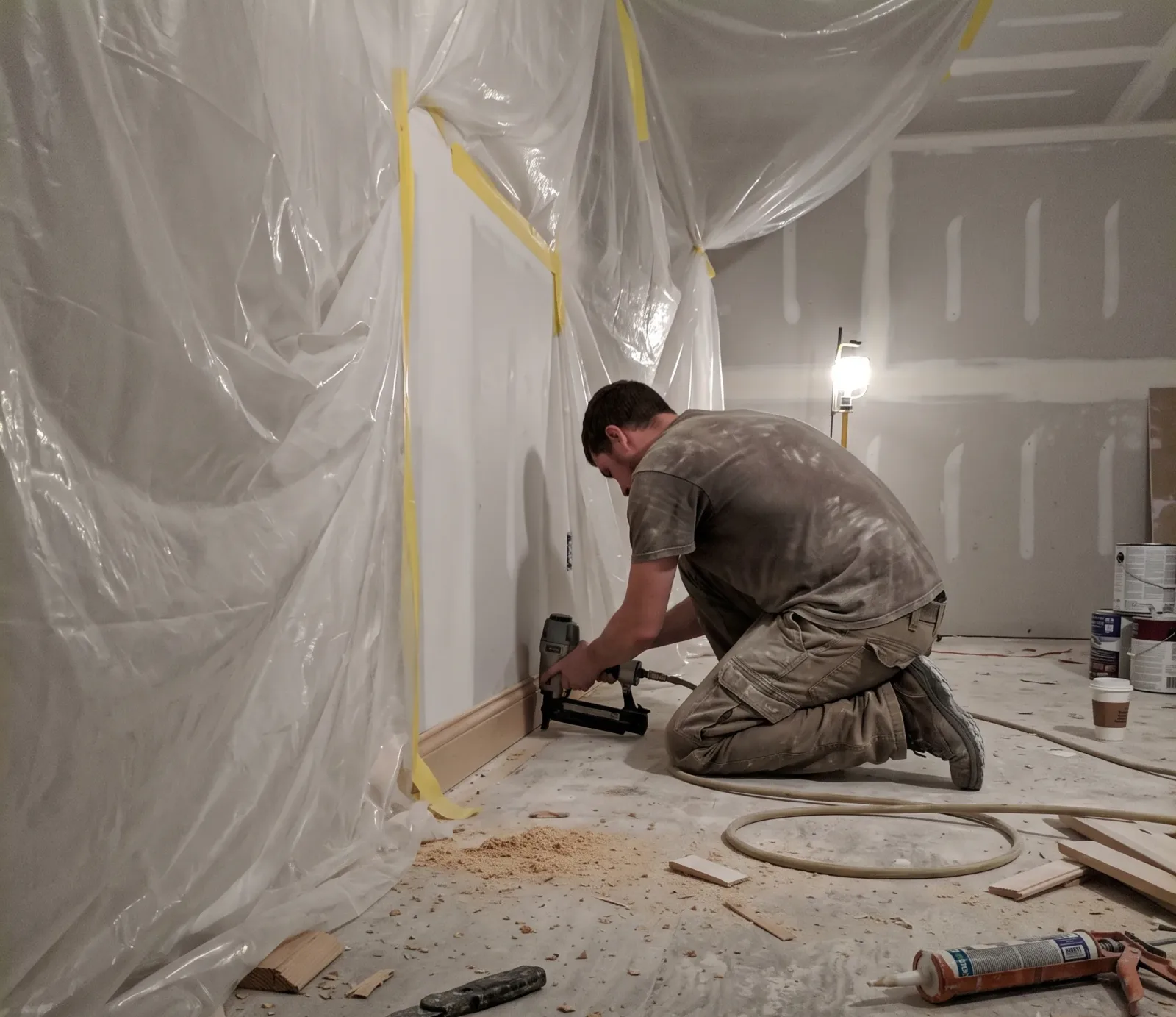
Rebuilding a Fort Lauderdale Home After Water Damage
What comes after drying: drywall, flooring, permits, and the final walkthrough.
Reconstruction after water damage in Fort Lauderdale means rebuilding what drying crews removed: framing repair, insulation, drywall, flooring, baseboard, trim, and cabinetry, plus painting and a textured finish match. It requires permits and code compliance under the Florida Building Code, and it ends with a final walkthrough and punch list before the job is considered done.
What Rebuilding Means After The Water Is Gone
Once floodwater from a king tide or tropical downpour is gone and the structure is dry, Fort Lauderdale homeowners face a second phase most people never plan for: rebuilding what got torn out. Drywall, flooring, and baseboard cut back during drying leave rooms stripped to studs or bare slab. Reconstruction turns a dried-out shell on Federal Highway or a canal-front lot in Rio Vista back into a livable home, and it involves permits, inspections, and real construction trades, not just cleanup.
Rebuild scope in Fort Lauderdale varies with how far the slab moisture spread before drying finished. A Rio Vista kitchen might need cabinetry and subfloor replacement, while a Sailboat Bend condo needs only baseboard and paint. Framing repair enters the job when wall studs stayed wet too long. Every step from drywall to final walkthrough should match what the drying report actually found, not a fixed package.
This phase matters because a rushed rebuild traps problems inside new walls. Drywall hung over a slab that never finished releasing moisture, or flooring installed before subfloor moisture readings are acceptable, can bring the same water damage back within a season. In a city where the water table sits high and close to the surface, that risk is higher than it looks once everything appears dry on the surface.
Drywall, Baseboard And Trim Replacement
Framing repair comes first if studs, sill plates, or door and window framing were compromised by standing water. In Fort Lauderdale's slab-built homes, framing damage usually starts at the bottom few feet of a wall, where water sat longest against wood or metal studs. Any warped, swollen, or soft framing member gets replaced before anything else goes back, because drywall and trim fastened to bad framing will not sit flat or hold long term.
Insulation replacement follows the same logic. Wet batt insulation loses its ability to hold shape and can hold moisture against a wall cavity long after the surface looks dry, so soaked insulation gets pulled and replaced rather than dried in place. This step happens before drywall goes back up, since insulation sits inside the wall cavity and is inaccessible once new drywall is hung and finished.
- Drywall is cut back to sound, dry material and replaced in full sheets rather than small patches, since a patched wall often shows through paint later.
- Subfloor replacement comes before new flooring goes down, since plywood or particleboard that stayed wet too long will not hold nails or adhesive properly.
- Flooring installation follows manufacturer spacing and moisture guidelines, since slab-set floors in Fort Lauderdale sit directly on concrete with little room for error.
- Cabinetry damaged at the base, common in kitchens near Coral Shores and Imperial Point after slab flooding, gets reset or rebuilt before countertops go back on.
- Painting happens last in each room, after drywall repairs are sanded smooth, so seams and old water lines on the wall disappear completely.
- A textured finish gets matched to the surrounding wall by hand, since most Fort Lauderdale homes were not built with a single factory texture throughout.
Flooring, Subfloor And Cabinetry Work
Drywall replacement is usually the most visible part of the rebuild. Crews cut back to sound, dry material, hang new sheets, tape, mud, and sand before texture and paint go on. In a townhome in Coral Ridge or a condo near Galt Ocean Mile, this might be limited to lower wall sections; in a single-story home in Melrose Park with deeper flooding, it can mean full walls in multiple rooms.
Matching an existing textured finish is part of getting drywall repair right. Older homes around Poinsettia Heights or South Middle River may have a heavier texture pattern than newer construction, and a patch that does not match the surrounding wall reads as an obvious repair even after paint. Painting comes last in this sequence, once drywall is fully cured and sanded smooth, and it typically covers the full wall or room rather than just the patched section so color and sheen match.
- A permit gets pulled through the City of Fort Lauderdale's Development Services Building Services Division before framing, drywall, or electrical repair starts.
- Framing repair addresses any wall studs or door frames softened by standing water, checked before drywall goes back up over them.
- Insulation replacement swaps out wall or attic insulation that absorbed moisture, since wet insulation loses its value and can hold odor.
- A final walkthrough with the homeowner checks every repaired room against the punch list before the job is marked complete and closed out.
How The Rebuild Phase Breaks Down
Flooring replacement and subfloor replacement depend heavily on what was originally installed. Tile over a concrete slab often survives flooding better than carpet or laminate, but grout lines and the underlying slab still need to test dry before new flooring goes down. Wood or engineered flooring near the Intracoastal or in canal-front homes in Harbor Beach is more vulnerable, since water wicks along seams and can warp planks well beyond the visibly wet area.
Baseboard and trim removed during drying get replaced after flooring and painting are finished, since trim covers the transition where wall meets floor. Skipping ahead and installing trim before flooring is set is one of the more common rebuild mistakes, because it forces a second removal and reinstallation later. The order matters more than the individual steps.
| Stage | What Happens | Why It Matters |
|---|---|---|
| Demolition review | Confirm what drying already removed | Avoids rebuilding over hidden moisture |
| Framing repair | Replace swollen or warped studs | Walls need a sound frame first |
| Insulation replacement | Swap out soaked batts and wrap | Wet insulation stops holding its R-value |
| Drywall and paint | Hang, tape, texture, then paint | Matches the textured finish next door |
| Flooring and trim | Install flooring, baseboard, cabinetry | Last layer before the final walkthrough |
Permits And Code Compliance In Fort Lauderdale
Cabinetry replacement comes up most often in kitchens and bathrooms, where lower cabinet boxes sit directly on the slab and absorb water first. Particleboard cabinet bases swell and delaminate quickly, while solid wood face frames may survive if caught early. In condo and townhome units near Las Olas Boulevard or in Flagler Village, tight kitchen footprints mean cabinet replacement often has to match existing counter and appliance dimensions closely.
Any plumbing or electrical work uncovered during cabinetry or wall demolition needs its own licensed trade, separate from general reconstruction. Florida Statutes Chapter 489 requires contractors doing structural, plumbing, or electrical repair to hold the applicable state certification or registration, and that requirement applies just as much inside a rebuilt kitchen wall in Sailboat Bend as it does on a new addition.
Final Walkthrough And The Punch List
Permits and code compliance apply to reconstruction work in Fort Lauderdale the same way they apply to any repair or alteration. The City's Development Services Department, through its Building Services Division, generally requires a permit before structural, electrical, or plumbing repair work begins, following the Florida Building Code and Broward County's hurricane-zone provisions. During a declared flood emergency the city has, in the past, allowed licensed contractors to start certain repairs before the permit was issued, with the permit filed afterward, but that is an emergency exception, not the standing rule.
The final walkthrough closes out the job. This is where a punch list gets checked off item by item: paint touch-ups, trim gaps, cabinet alignment, flooring transitions, and confirmation that any required inspection has been passed and closed with the city. For a homeowner in Coral Ridge Isles or Riverside Park, this walkthrough is the point to raise anything that looks unfinished, before the crew considers the job complete.
Rebuild Phase At A Glance
- Rebuild work that touches framing, drywall, or electrical needs a City of Fort Lauderdale permit before work starts, not after.
- Subfloor gets replaced before new flooring goes down; installing over damaged subfloor voids most flooring warranties.
- Slab-set homes near the Intracoastal often need cabinetry reset at the base, since cabinets sit directly on concrete.
- A final walkthrough and written punch list close out the job, room by room, before it's called finished.
- Textured wall finishes are matched by hand, since most homes here were not built with one factory texture.
- Contractors doing structural, electrical, or plumbing repair must hold Chapter 489 licensing through Florida's DBPR.
Frequently Asked Questions
Do I need a permit to rebuild after water damage?
It depends on how much was removed during drying. A single room with lower drywall and baseboard can often finish in one to two weeks. A full kitchen with cabinetry, subfloor, and flooring in a canal-front home near the New River or Harbor Beach can take several weeks, especially once permit review and inspections are factored in.
Can I skip the permit if the repair is small?
Yes, but only from a licensed contractor pulling a City of Fort Lauderdale permit through Development Services. Skipping that step can cause problems later with insurance or when you sell, since unpermitted rebuild work near Rio Vista or Victoria Park often surfaces during a title search or resale inspection.
Will discontinued flooring match after a partial replacement?
Matching is easiest with common tile or laminate still in production, harder with older or discontinued flooring. In older Melrose Park and Poinsettia Heights homes, crews sometimes replace flooring room-to-room instead of patching so the transition doesn't stand out.
How long does a drywall and flooring rebuild take?
Once drying is confirmed complete, a straightforward drywall and flooring rebuild in a single room often runs one to two weeks. Larger jobs near the New River or in canal-front sections of Rio Vista, with cabinetry or framing repair, can run several weeks longer.
What should a rebuild estimate include?
Ask whether the estimate includes permit costs, code-compliance upgrades, and a final walkthrough with a written punch list. In Harbor Beach and Coral Ridge, older homes sometimes need insulation or framing brought up to current Florida Building Code, which adds cost.
Ready to start the rebuild?
If your Fort Lauderdale home is past drying and ready for drywall, flooring, or a full rebuild, call now to talk through the scope with the licensed pros we connect you with.
Call (954) 910-2507