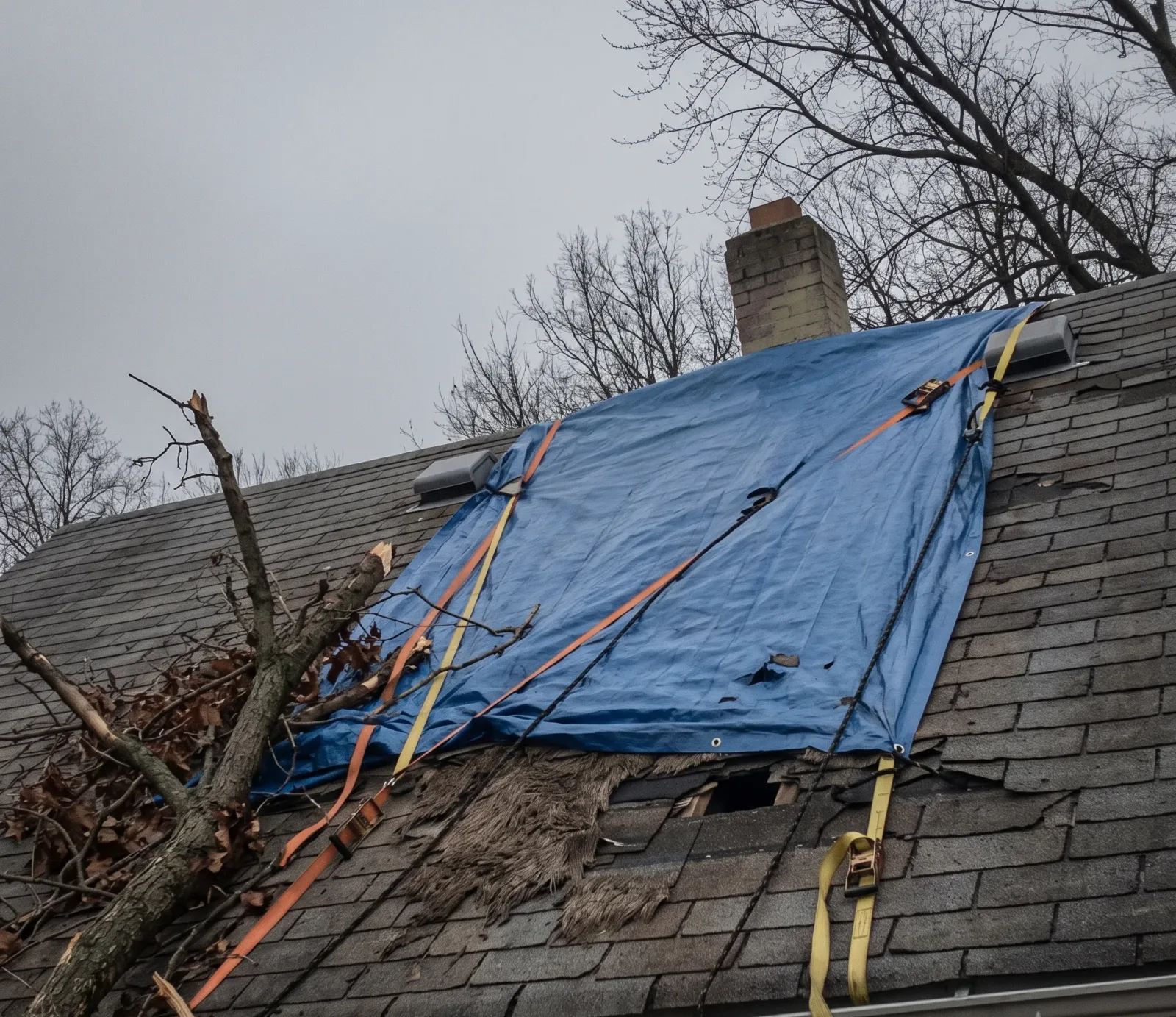
A Fort Lauderdale home rarely floods in one dramatic moment. More often, water gets in quietly, through a flat roof seam near Sunrise Boulevard or a slab edge after a tropical downpour, and sits unnoticed for weeks. The signs are small at first: a shadow on a wall, a soft patch of flooring, a smell that was not there before. Knowing what to look for early keeps a minor leak from becoming a much bigger repair.
Why Damage Stays Hidden
Fort Lauderdale homes rest on concrete pads, not raised foundations, so water rarely announces itself at the door. It travels sideways through drywall and under baseboards long before anyone notices. A homeowner near the New River or a canal might only catch the smell weeks later, once the drywall has already gone soft behind the paint.
Paint and Wall Clues
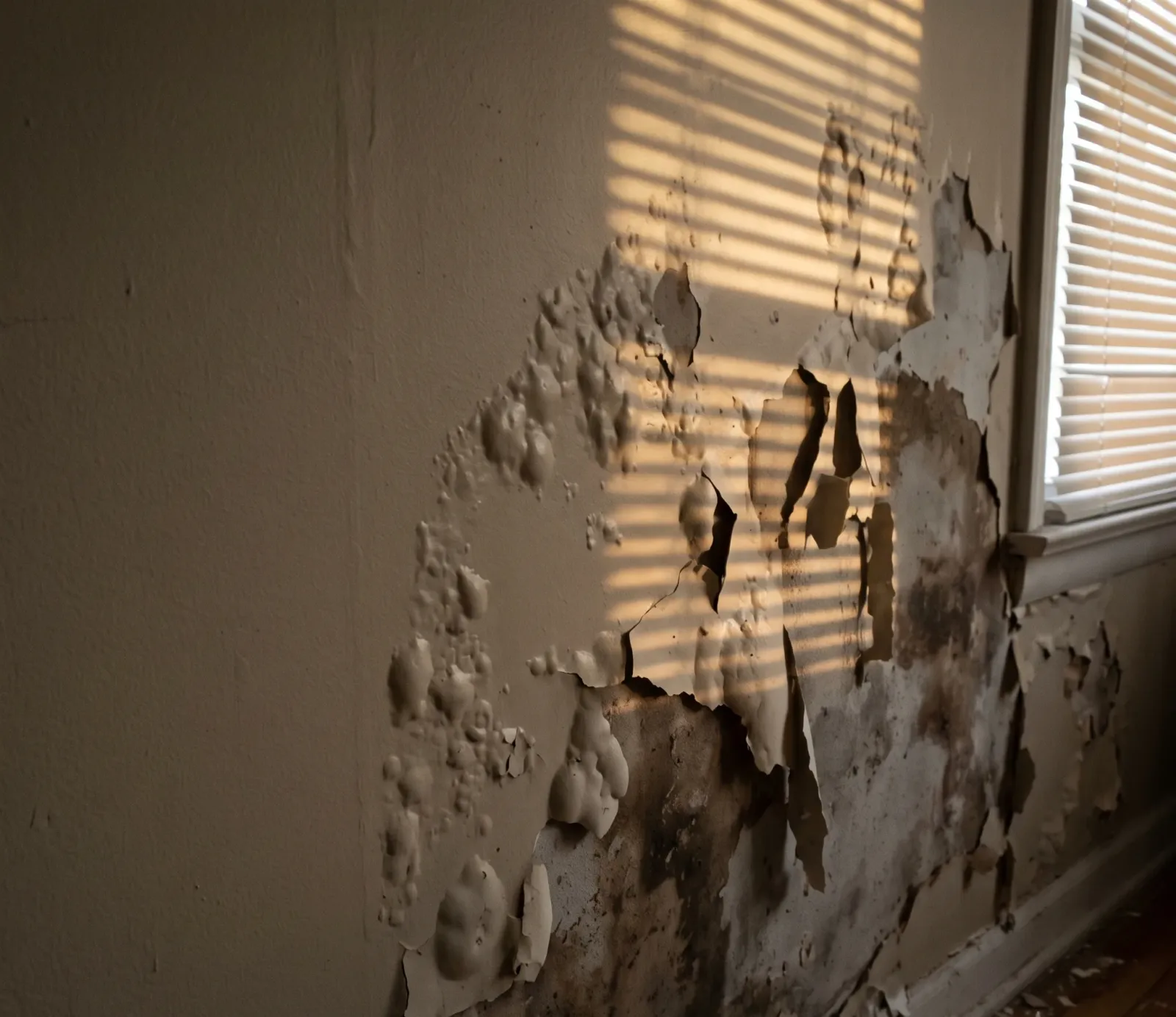
Peeling paint is one of the clearest early signs. When moisture gets behind a painted wall or ceiling, the paint loses its grip and lifts, bubbles, or flakes even if the wall looks dry to the touch. Bubbling drywall often shows up nearby, a soft, slightly swollen patch where the paper facing has separated from the gypsum underneath. Both point to water sitting inside the wall, not just on top of it.
Baseboards and Trim Tell
Warped baseboards are another quiet giveaway. Wood or MDF trim that has taken on moisture will cup, swell, or pull away from the wall, sometimes just at one end. Warped baseboards near an exterior wall or a bathroom often mean water has been wicking up from the floor. Swollen wood in door frames or cabinet bases nearby usually points to the same source.
That Musty Smell Matters
A rust stain below a window or an efflorescence crust near the slab edge points to water moving through a spot for weeks, not days. In a canal-front home near the Intracoastal, check where a wall meets the floor. A tide line on baseboard or a soft spot underfoot near that seam usually means moisture worked upward from below before anyone noticed.
Ceilings Sagging or Stained
Warped baseboards, buckling floors, or a ceiling that sags near Las Olas Isles or Rio Vista often trace back to a roof or slab issue that started small. Swollen wood around a doorframe, delamination on cabinetry, or drywall that bubbles near Victoria Park are worth a second look, since each can mark water that has been sitting far longer than the surface shows.
Floors That Buckle or Soften
Buckling floors and soft spots are common in homes near canals or the Intracoastal, where ground moisture can move up through a slab over time. A buckling floor may show ridges or gaps between planks, while a soft spot underfoot in tile or vinyl often means the subfloor or adhesive underneath has broken down. Either one usually means water has been present far longer than a single storm.
Water Stains and Tide Lines
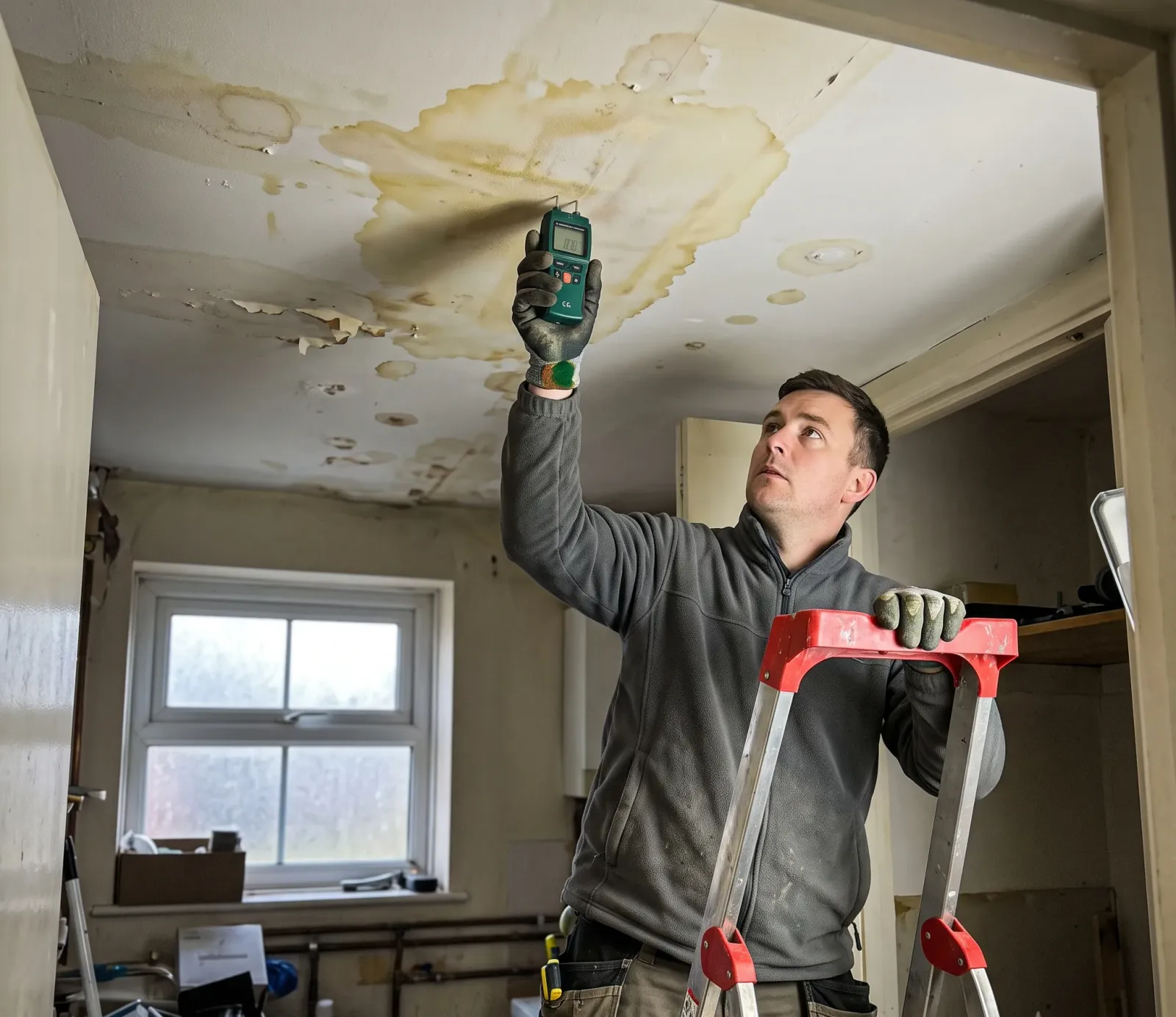
Water stains show up as rings or blotches on ceilings, walls, or around window frames, often lighter in the center and darker at the edge. A tide line is a related but distinct mark, a horizontal band left behind after standing water recedes, common after street flooding reaches a garage or ground floor near low-lying areas like Sistrunk or Melrose Park. Both are a record of where water sat, not just that it was there.
Rust Stains and Efflorescence
Rust stains and efflorescence point to moisture moving through masonry or metal fixtures. Rust stains often appear around metal door frames, fasteners, or fixtures that were not built to stay wet. Efflorescence looks like a white, chalky residue on block walls or concrete, left behind as water evaporates and minerals rise to the surface. Neither is dramatic on its own, but both mean moisture has been passing through that material repeatedly.
When Slabs Hold Moisture
Fort Lauderdale's high water table means ground moisture can keep pushing up into a slab long after visible floodwater from a king tide or a heavy tropical downpour has drained away. This is different from a one-time spill. A slab that stays damp for weeks after a storm, even without standing water, can still feed a musty smell or bubbling drywall well after the rain has stopped.
Condo and Townhome Clues
Condo and townhome owners face a version of these same signs, often with an added wrinkle: a leak can start above a unit, behind a shared wall, or in a common flat roof and only become visible once it reaches someone else's ceiling. Discoloration on a condo ceiling near Galt Ocean Mile or a unit facing the Intracoastal is worth reporting quickly, since the source may be several floors away.
When to Get It Checked
None of these signs prove exactly where water is entering or how far it has spread under the surface. Moisture readings taken at the wall, floor, and ceiling can map that out in a way a visual check cannot. If several of these marks show up together in one room, it's worth having that checked before the next hurricane season storm makes the damage harder to reverse.
Dealing with this in your home?
Fort Lauderdale sits barely above sea level, so water damage rarely waits for a burst pipe. Tropical downpours and king tides push water across slab foundations in Victoria Park, Rio Vista, and Wilton Manors alike. The licensed pros we connect you with know slab drying takes longer here, since the shallow water table keeps feeding moisture back up from underneath.