After a flood in a Fort Lauderdale home, a room can look and feel dry within a day or two, but drywall and flooring often hold water well past that point. The only way to know for sure is a moisture meter reading compared against a dry standard set for that material. This article explains how pin and pinless meters work, and why the numbers matter more than how a room feels near the New River or the Intracoastal.
Two Meter Types, Different Jobs
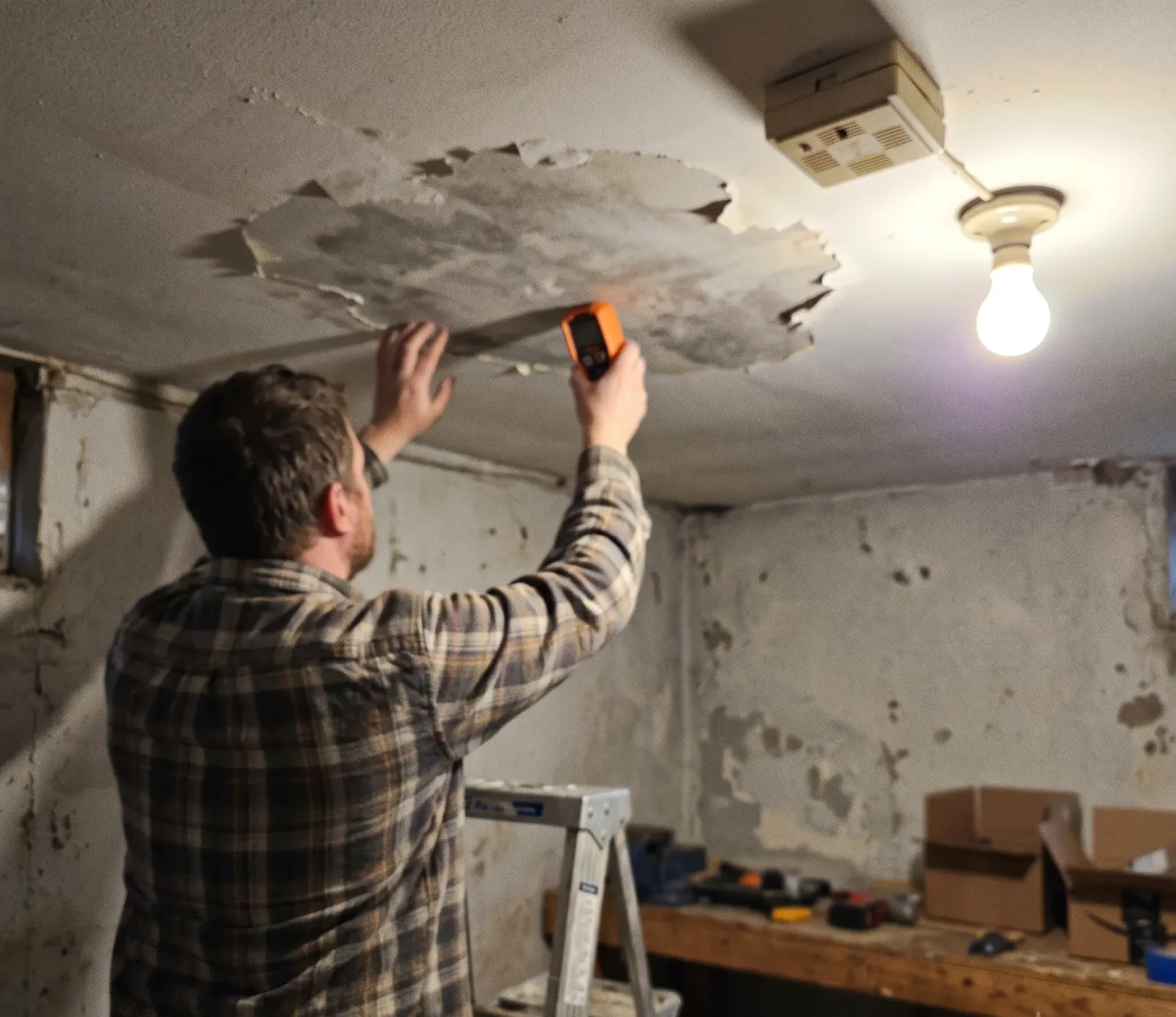
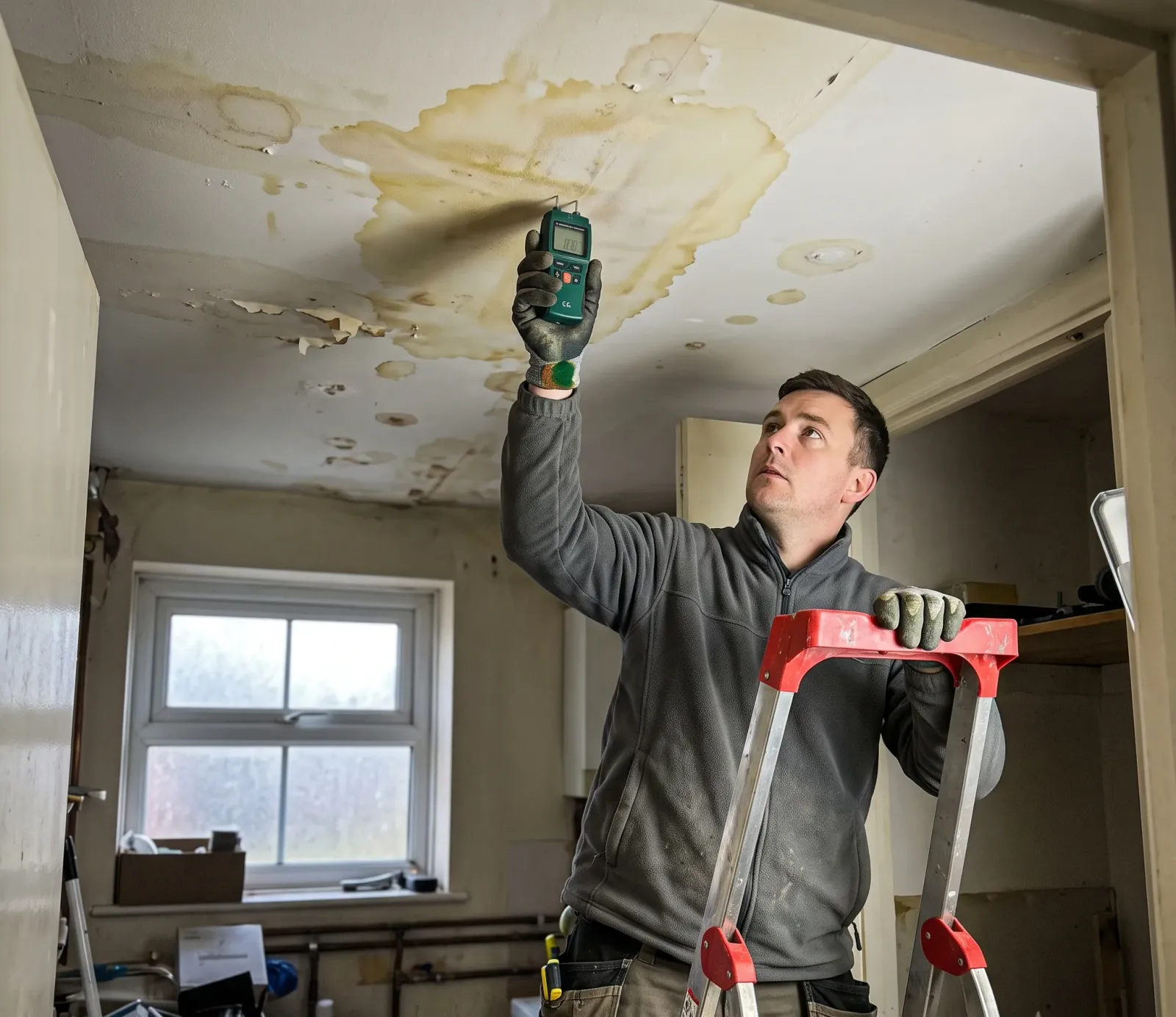
Two tools do this job. A pin meter pushes a pair of thin probes into the material and reads the resistance between them. A pinless meter rests flat on the surface and scans below it with radio frequency signals, leaving no mark on drywall or trim. Crews near Las Olas Boulevard and Rio Vista often start with the pinless scan, then confirm a suspect reading with pin probes where the surface allows it.
Why Pin Meters Get Used
Pin meters work well on wood framing, baseboards, and studs because the probes can reach a specific depth and confirm moisture at that exact point. This matters in slab homes across Fort Lauderdale neighborhoods like Rio Vista or Victoria Park, where wall framing above a slab can hold moisture the surface never shows. The trade-off is two small holes per reading, which is why pin meters are used selectively, not everywhere.
Why Pinless Meters Get Used First
Pinless meters scan drywall, flooring, and cabinetry without marking the surface, which makes them the first tool used across a wide area like a flooded living room in Harbor Beach or Coral Ridge. A pro can move the meter across a wall in minutes and flag wet zones before deciding where a pin reading or a cut is actually needed. Speed and no surface damage are the appeal.
What A Baseline Reading Does
Before drying equipment runs, a baseline reading records how wet each material is at the start. That number becomes the comparison point for every later reading, showing whether moisture is actually dropping or just holding steady under a fan. Without a baseline, nobody can prove a material dried; they can only guess based on how the room feels.
What A Reference Reading Adds
A reference reading, sometimes called an unaffected material reading, comes from a similar material in the same home that the water never reached, such as drywall in a hallway untouched by flooding. That number sets the local dry standard for this specific house, since humidity and material age already affect any moisture reading before a flood ever happens. Fort Lauderdale's high humidity makes this local comparison more useful than a fixed number pulled from a chart.
The Relative Scale On Drywall
Pinless meters reading drywall or plaster usually show a relative scale, a range of numbers rather than a true percentage of moisture content. That scale still works for comparison, since a reading of 40 next to a reference reading of 12 in the same house clearly shows which wall is still wet. The scale does not need to be a precise percentage to prove a material has not reached dry standard yet.
Wood Moisture Equivalent Explained
Meters built for wood are calibrated to read wood moisture content directly, but the same meter is often used on other materials like drywall or plaster. On those materials the number shown is a wood moisture equivalent, a reading scaled to match the wood calibration rather than a true reading for that material. It is still useful for tracking change over time, just not as an exact percentage for non-wood materials.
Why Calibration And Density Matter
A meter's calibration assumes a certain material density, so a reading on dense hardwood flooring and a reading on lightweight drywall are not directly comparable even at the same number. This is one reason a single moisture reading from one spot never tells the whole story of a room. Material type has to be accounted for before a number means anything.
How Dry Standard Gets Set
Dry standard is not one fixed number across every home; it is the reference reading from unaffected material in that specific house, adjusted for the material being tested. A wall reaches dry standard when its reading matches, or comes close enough to, the reference reading taken from material the flood never touched. That comparison is what tells a pro when drying equipment can come out.
Why Readings Get Logged Daily
A pin meter uses two small probes pushed into the material to read moisture content between them, useful on framing lumber or a door jamb near Las Olas Boulevard where a small puncture doesn't matter. A pinless meter scans a wider pad across drywall or flooring with no marks at all. Both compare against a dry, unaffected reference reading from the same room, not a fixed number, since material density changes what counts as normal.
When A Number Still Needs A Pro
A moisture meter is simple to hold but not simple to interpret across different materials, depths, and reference points in the same house. Reading a number wrong, or comparing it against the wrong material, can leave a wall closed up while it is still wet underneath. For a reading that actually answers whether a room in Fort Lauderdale has dried, the licensed pros we connect you with can take one and explain what it means.
Dealing with this in your home?
Fort Lauderdale sits barely above sea level, so water damage rarely waits for a burst pipe. Tropical downpours and king tides push water across slab foundations in Victoria Park, Rio Vista, and Wilton Manors alike. The licensed pros we connect you with know slab drying takes longer here, since the shallow water table keeps feeding moisture back up from underneath.